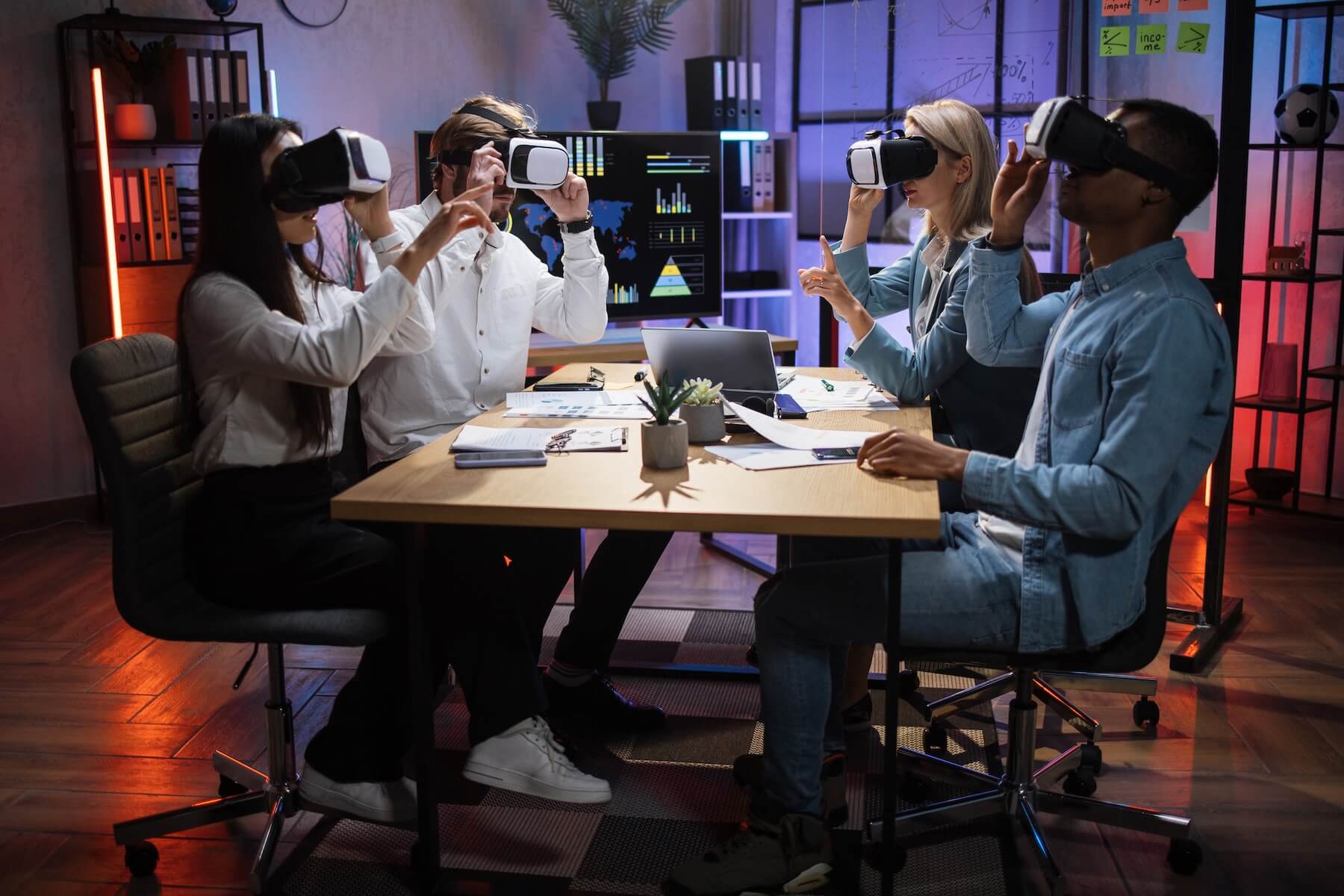
Game & AR/VR Development: Creating Immersive Digital Worlds
Building Next-Generation Games, AR/VR Applications, and Digital Twins for Entertainment and Enterprise.
We turn ambitious visions into breathtaking reality. Our services cover the full spectrum of immersive development, from high-performance video games and interactive educational experiences to complex AR/VR solutions for enterprise training and simulation. We merge creative design with deep technical expertise in real-time rendering and cloud infrastructure.
Key Feature
Core Deliverables: Your Immersive Assets
- Immersive Applications
- Game Development
- Digital Twin & Simulation
- Technical & Art Assets
From Concept to Immersive Launch
Our strategy is built on continuous testing and optimization to ensure every dollar spent delivers maximum return.
Concept & Pre-Production
Conduct in-depth Creative Strategy, Narrative Design, and UX/UI research (motion, interaction). Define the technical architecture, target platform requirements (e.g., Quest, HoloLens), create detailed Art Style Guides, and establish the Game Design Document (GDD) or application specification.
Prototyping & Vertical Slice
Build an Interactive Prototype and a Vertical Slice (a small, polished section) to validate core mechanics, performance targets, and creative vision. Finalize optimized art pipelines, and establish scalable Cloud/Backend infrastructure.
Production & Iteration
Full-scale content creation (3D models, animation, environments). Development in agile sprints with continuous Performance Optimization, Graphics Tuning, and Quality Assurance (QA) across all target platforms for comfort and frame rate stability.
Launch & Post-Release
Final submission and deployment to digital storefronts (App Stores, Steam, Meta). Implement backend analytics, set up continuous support, plan post-launch content updates, and manage community feedback for continuous improvement.
Why Choose Us?
Success in the immersive space requires a partner who masters both the creative artistry and the computational challenges of real-time rendering.